



Product: Natural Tulsi Mala 108 Beads – Handknotted Japa Mala
Material: 100% Natural Tulsi Wood (Holy Basil – Ocimum sanctum)
Bead Count: 108 Beads + 1 Guru Bead
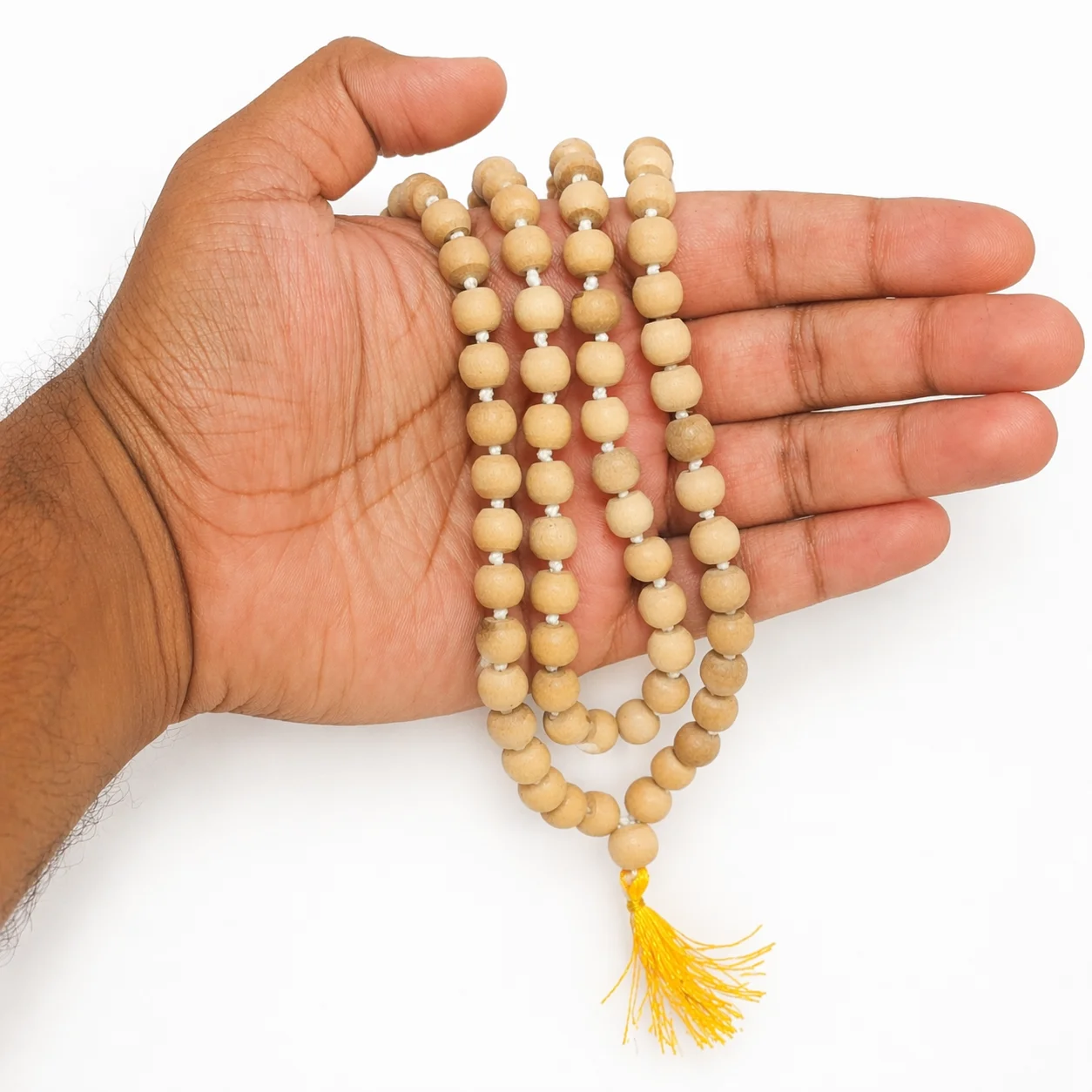
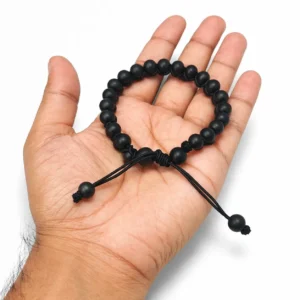
Bead Size: 8mm
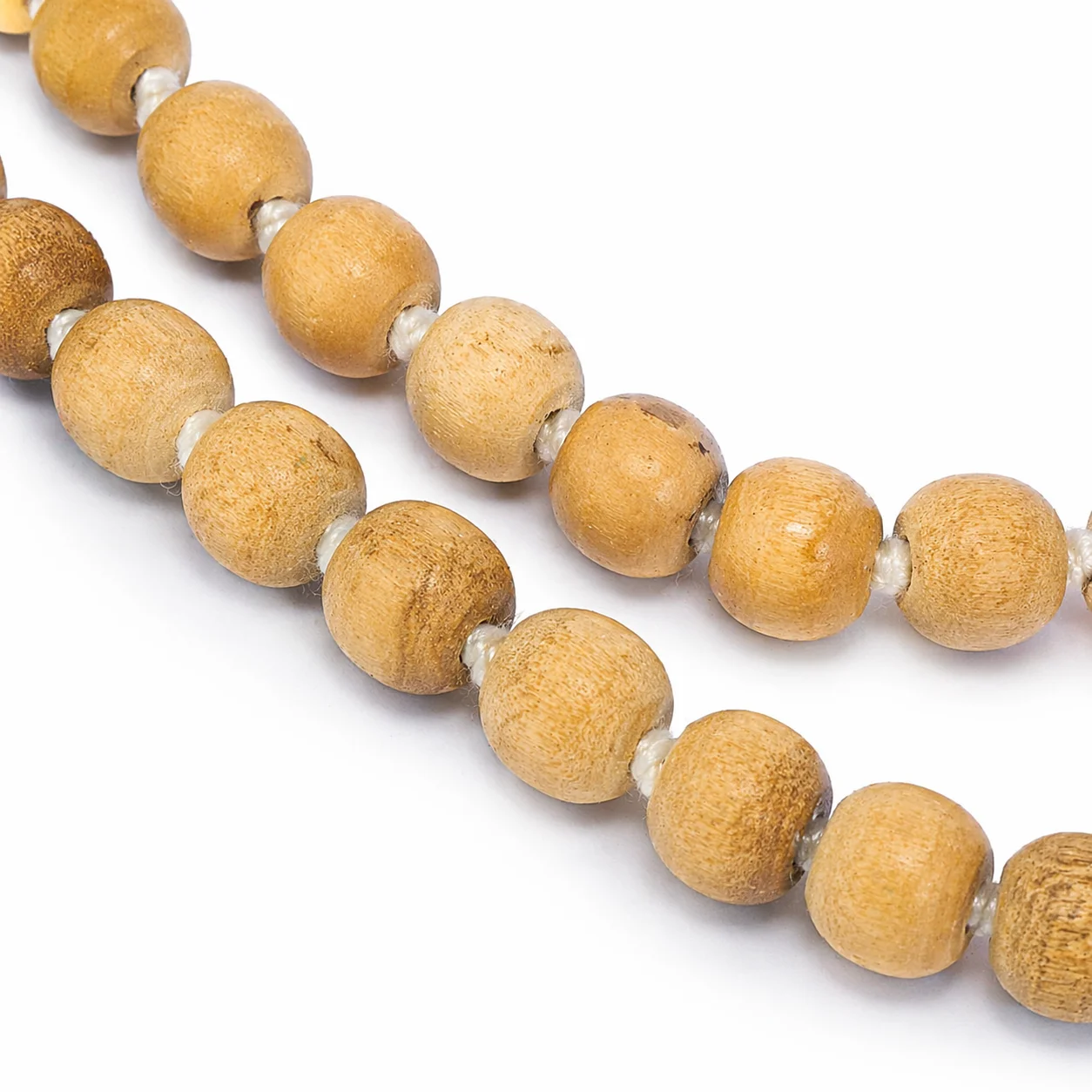
Stringing: White Cotton Thread – Handknotted Between Each Bead
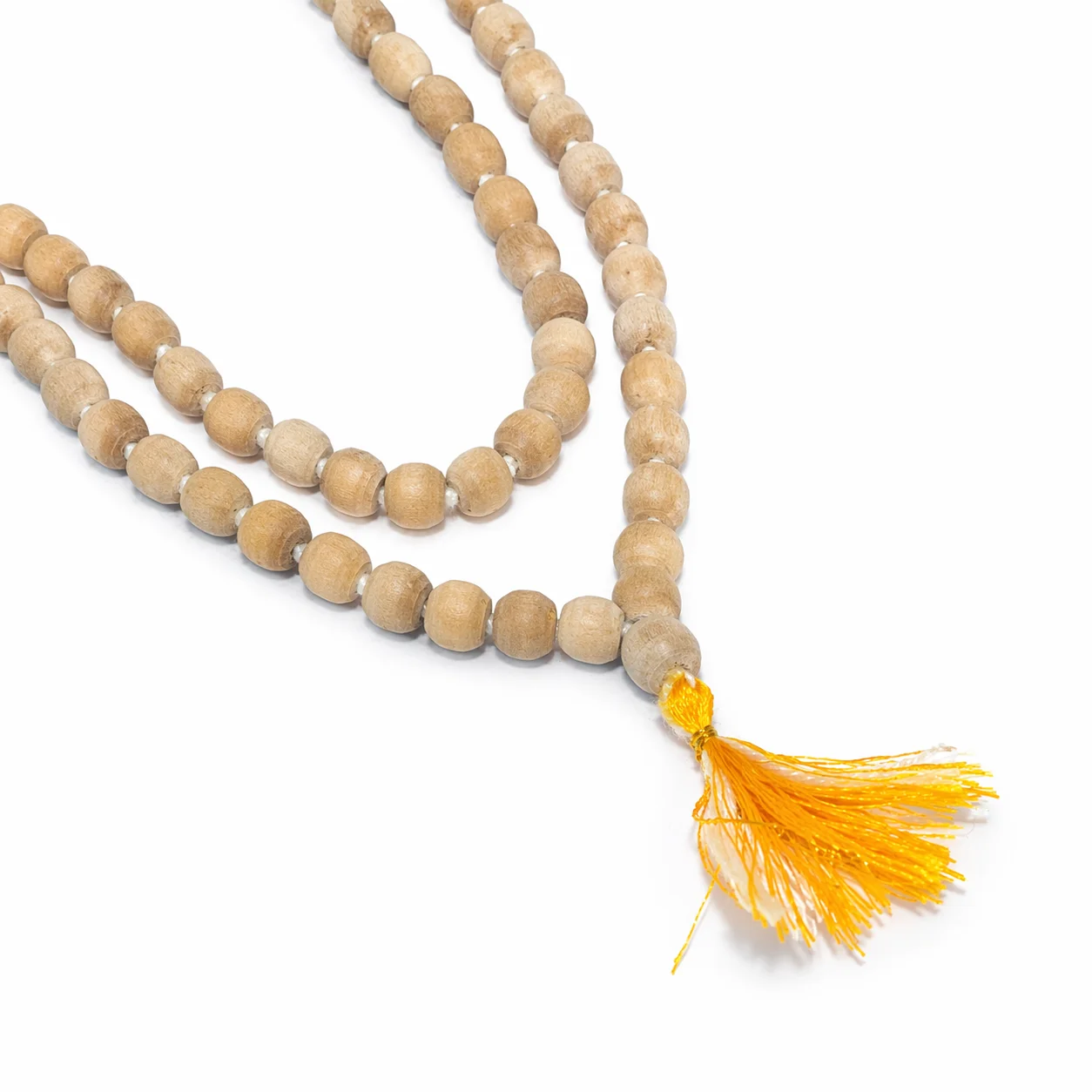
Tassel: Traditional Saffron/Yellow Thread Tassel
Usage: Japa meditation, mantra chanting, daily wear, Vishnu/Krishna devotion, ISKCON practice
View Size, Care and Japa Usage Details
Natural Tulsi Mala 108 Beads 8mm – Traditional Handknotted Japa Mala
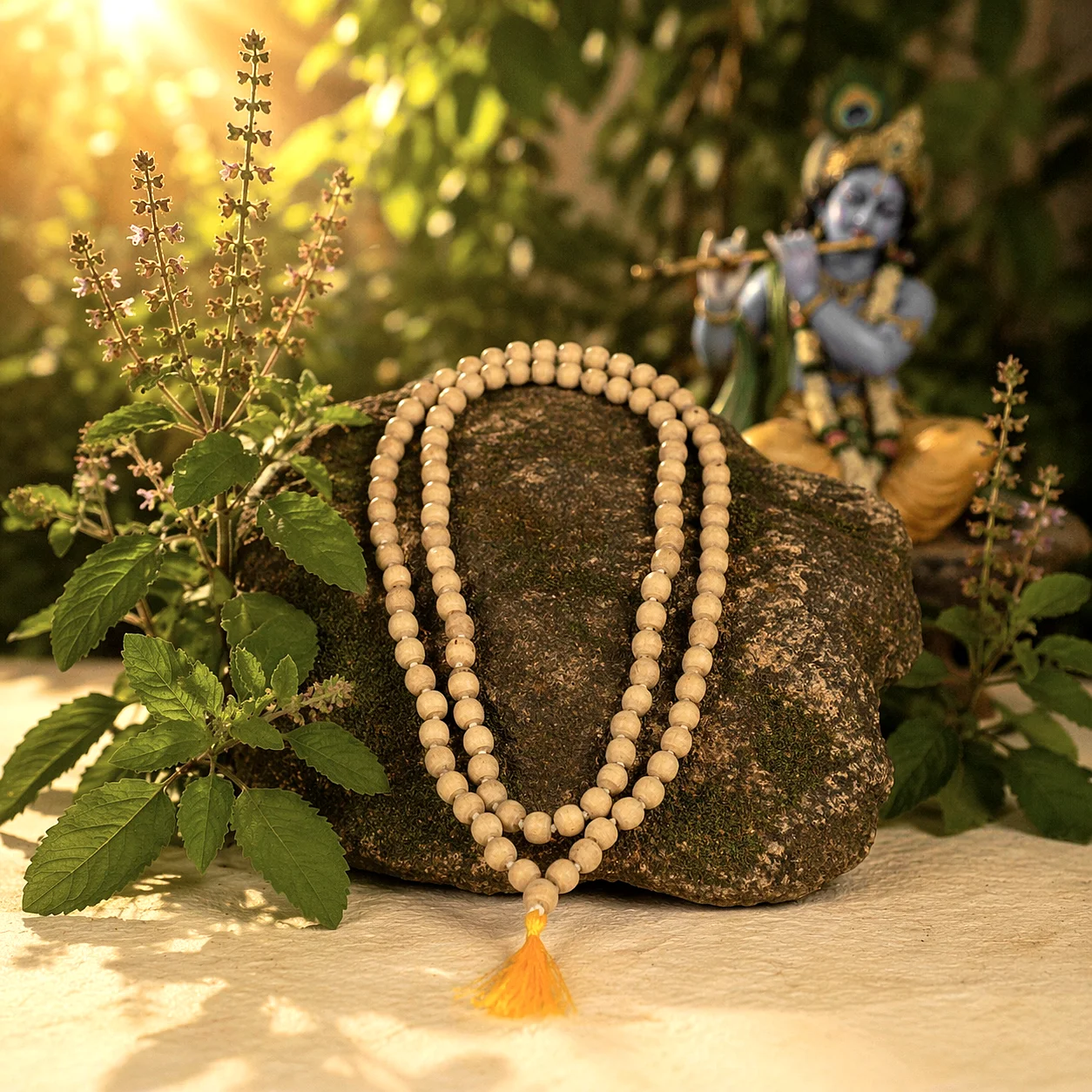
The tulsi mala is one of the most sacred prayer malas in Hindu tradition, especially revered by Vaishnavite devotees, Krishna bhaktas, and the global ISKCON community. This natural tulsi mala 108 beads 8mm is handcrafted from pure Tulsi wood (Holy Basil) with traditional handknotted construction between each bead. Devotees searching for tulsi mala, tulsi japa mala, krishna mala, or 108 beads tulsi mala will find this mala to be an authentic choice for daily japa, mantra chanting, and devotional practice.
Tulsi, scientifically known as Ocimum sanctum or Holy Basil, is considered one of the holiest plants in Hindu tradition. The Tulsi plant itself is worshipped daily in millions of Hindu homes, and malas made from Tulsi wood carry deep spiritual significance for Vishnu, Krishna, Rama, and all Vaishnavite devotional practices.
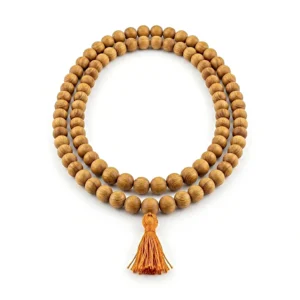
Each tulsi mala 108 beads features 8mm beads carefully strung on durable white cotton thread with a hand-tied knot between every single bead. This traditional handknotted construction is the hallmark of an authentic japa mala — it prevents bead-to-bead friction, maintains proper spacing for comfortable finger movement during japa, and ensures the mala does not break apart even if the thread wears in one place.
Why Choose This Tulsi Mala?
- Natural Tulsi Wood: Made from pure Holy Basil wood — the most sacred wood for Vaishnavite devotional practice
- Traditional 108 Beads + Guru Bead: The sacred japa count used for mantra chanting in Hindu tradition
- Comfortable 8mm Bead Size: Ideal for finger rotation during japa — not too small to handle, not too large to feel bulky
- Handknotted Between Beads: Traditional japa mala construction with a knot between each bead for proper spacing and durability
- Saffron Tassel at Guru Bead: Classic traditional finish representing the guru bead and completion point of the mala
- Natural Unpolished Finish: Retains the authentic grain and texture of Tulsi wood — no artificial polish or coating
The warm cream-beige tone of natural Tulsi wood, the precise handknotted spacing, and the saffron tassel give this tulsi japa mala an authentic traditional appearance — instantly recognisable to Vaishnavite devotees worldwide.
The Sacred Significance of Tulsi Mala
Tulsi holds a unique place in Hindu devotional tradition as the plant form of Goddess Lakshmi and is considered most dear to Lord Vishnu and Lord Krishna. A tulsi mala is traditionally worn and used for:
- Vishnu Bhakti: Worship and meditation on Lord Vishnu and his incarnations
- Krishna Consciousness: Used by ISKCON devotees and Hare Krishna practitioners worldwide for the Maha Mantra japa
- Rama Devotion: Chanting of Rama naam and Rama mantras
- Radha Krishna Worship: Devotion to the divine couple in Vaishnavite tradition
- Maha Mantra Japa: “Hare Krishna Hare Krishna, Krishna Krishna Hare Hare, Hare Rama Hare Rama, Rama Rama Hare Hare”
- General Mantra Practice: Any Vaishnavite mantra, Vishnu sahasranama recitation, or personal japa
How to Use a Tulsi Mala for Japa
Traditional japa mala practice with a tulsi mala follows these steps:
- Hold the Mala Respectfully: Hold the mala in your right hand, draped over the middle finger
- Start at the Guru Bead: Begin japa from the bead next to the guru bead (the larger bead with the tassel)
- Chant with Each Bead: Recite your chosen mantra once per bead, moving the mala with your thumb
- Do Not Cross the Guru Bead: When you reach the guru bead after 108 beads, do not cross it. Instead, reverse direction and continue japa
- Maintain Focus: Keep your mind on the mantra and the deity — the tulsi mala supports your meditation practice
The 8mm bead size of this tulsi japa mala is ideal for comfortable thumb rotation during extended japa sessions.
Tulsi Mala Care Instructions
Tulsi wood is softer than Karungali or Rudraksha and requires gentle care:
- Avoid prolonged water and moisture exposure — Tulsi wood absorbs moisture readily
- Keep away from perfume, deodorant, soap, shampoo, and chemicals
- Do not soak in liquids under any circumstances
- Wipe gently with a soft dry cloth after use
- Store in a dry clean pouch or japa bag when not in use
- Handle the handknotted thread gently — do not pull or stretch the mala
- Accept the gradual darkening of beads with use as a sign of authentic Tulsi wood
Frequently Asked Questions
Q: Is this a genuine Tulsi Mala?
A: Yes. Our tulsi mala is made from 100% natural Tulsi wood (Holy Basil). No artificial substitutes or imitation woods are used. Each bead shows the natural grain and texture of authentic Tulsi wood.
Q: What is the significance of 108 beads?
A: The number 108 is considered sacred in Hindu tradition and is the standard count for japa malas. Chanting a mantra 108 times on a tulsi mala completes one full round of japa — a traditional spiritual practice.
Q: Is this mala suitable for ISKCON and Hare Krishna devotees?
A: Yes. This tulsi mala 108 beads is traditionally used for the Maha Mantra japa practiced by ISKCON and Hare Krishna devotees worldwide — “Hare Krishna Hare Krishna, Krishna Krishna Hare Hare, Hare Rama Hare Rama, Rama Rama Hare Hare.”
Q: Why are my tulsi beads changing colour?
A: Tulsi wood naturally darkens over time with body oils, sweat, japa use, and age. This gradual colour change from cream-beige to deeper brown tones is a sign of authentic Tulsi wood and is considered auspicious by devotees. Synthetic or artificial substitutes do not show this natural patina.
Q: Can I wear this tulsi mala daily?
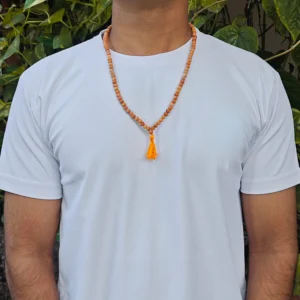
A: Yes. Many Vaishnavite devotees traditionally wear Tulsi malas continuously as a sign of Vishnu/Krishna bhakti. However, the wood is soft and requires care — remove before bathing, swimming, or intense physical activity.
Q: Can I order a custom bead size or length?
A: Yes. Contact us via WhatsApp for custom bead size, bead count, or length requirements. We accommodate custom orders on request.
Explore more authentic spiritual products in our online store. Learn more about the sacred Tulsi plant at Wikipedia – Ocimum tenuiflorum.



Reviews
There are no reviews yet.